
Die Frauenrechtsorganisation medica mondiale hat im Laufe ihrer langjährigen Arbeit mit vergewaltigten Frauen in Kriegs- und Krisengebieten einen stress- und traumasensiblen Ansatz entwickelt, der sich auf die Situation Schutzsuchender in Deutschland übertragen lässt. Dieses Wissen geben die Expertinnen aus Köln nun im Rahmen eines Pilotprojektes in Nordrhein-Westfalen weiter, um geflüchteten Frauen Zugang zu psychosozialer Unterstützung zu eröffnen. Weiterlesen
Anerkennung: Blog Anerkennung Gesundheitsberufe
Südlich der Sahara geboren und nun in Köln
Die Volkshochschule Köln lädt ein zu einem Informationsabend über Afrika am Donnerstag, 9. Juni 2016, 19.30 Uhr, auf den wir gern hinweisen.
Afrika ist ein vielfältiger Kontinent, der sich nur schwer von den Folgen jahrhundertelanger Kolonisierung durch europäische Großmächte lösen kann. Trotz aller Krisen und Konflikte und dem Wunsch vieler junger Menschen aus Afrika in Europa eine neue Zukunft zu finden, ist es jedoch keineswegs so, dass sich nun Millionen auf den Weg machen. Vielmehr muss differenziert und mit viel mehr Wissen und Informationen auf die Länder und Regionen geblickt werden. Dies gilt auch für die Begegnung und das gegenseitige Gespräch mit Menschen aus Afrika, die mittlerweile in Köln die zweitgrößte Community bilden.
Im Gespräch: Eli Abeke, Bündnis14Afrika; Dirke Köpp, Leiterin der Redaktion Afrika Französisch, Deutsche Welle; Daniel Pelz Leiter der Redaktion Afrika Englisch, Deutsche Welle; Moderation: Wolfgang Üllenberg van Dawen
Wichtige Rechtsgrundlagen für Ärztinnen und Ärzte in Anerkennungsprüfungen
Der Arztberuf in Deutschland ist besonders geschützt. Es bedarf der besonderen Erlaubnis, den Beruf als Ärztin oder als Arzt in Deutschland auszuüben. Diese Regelung ist selbst Teil der Heilberufsgesetze, die Ärztinnen und Ärzte kennen müssen, die hier ihren Beruf ausüben möchten. Regelmäßig sind Fragen danach Inhalt der Anerkennungsprüfungen, insbesonders bei Kenntnisprüfungen.
Hier haben wir noch einmal im Überblick die wichtigsten Rechtsthemen aufgelistet, die wir in unseren Seminaren zur Vorbereitung auf die Approbation behandeln. Weiterlesen
»Ich sehe meine Zukunft als Krankenpflegerin in NRW« – Anerkennung für Gesundheits- und Krankenpfleger/innen
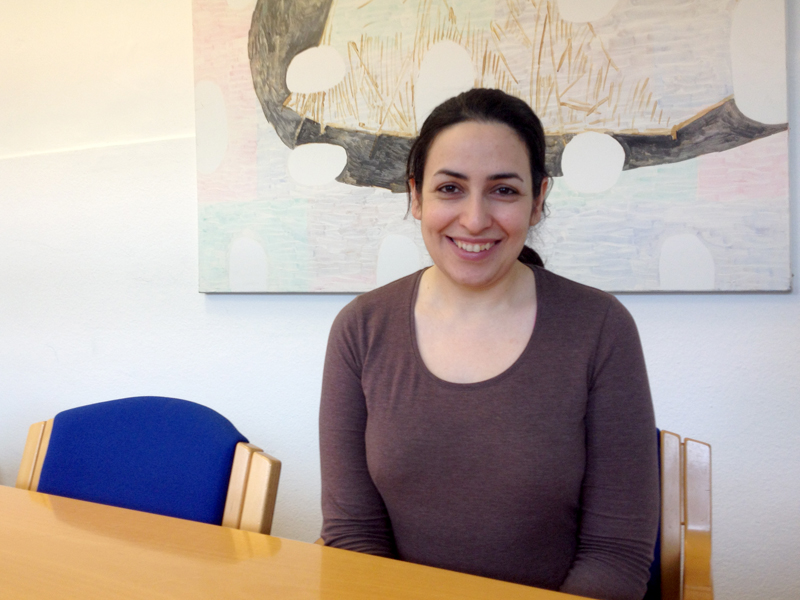
Nasrin E., Krankenpflegerin B.A., wird über das Programm IQuaMed gefördert
Nasrin E., eine unserer vielen Teilnehmerinnen am heutigen Informationsseminar »Wege zur Anerkennung«, haben wir zu einem Interview eingeladen:
Was möchten Sie in Zukunft tun?
Ich möchte so gern meine Anerkennung als Gesundheits- und Krankenpflegerin bekommen, um endlich hier arbeiten zu können. Ich bin nun schon drei Jahre in Deutschland, zusammen mit meinem Mann, der im Bereich der Gesundheitswissenschaften an seiner Doktorarbeit schreibt. Ich würde auch gern wieder berufstätig sein können, denn ich verfüge über eine gute Ausbildung und viel Berufserfahrung.
Was haben Sie bislang unternommen, um die Anerkennung Ihres Berufs als Gesundheits- und Krankenpflegerin zu bekommen?
Ich habe alle meine Unterlagen zur Bezirksregierung geschickt, und die Bezirksregierung hat dann meine Unterlagen geprüft. Die Ausbildung in meinem Herkunftsland Iran ist anders als in Deutschland. Ich habe vier Jahre Krankenpflege studiert, meinen Bachelor gemacht und anschließend noch ein Masterstudium in Medizinischer Physiologie erfolgreich abgeschlossen. Insgesamt war ich danach acht Jahre als Krankenpflegerin berufstätig. Leider konnte nur wenig angerechnet werden, mein Masterstudium war gar nicht relevant für die Anerkennung und leider auch meine praktische Berufserfahrung. In meinem Herkunftsland wird nur die Dauer und der Ort der Berufstätigkeit bescheinigt, aber nicht im Detail, was ich gemacht habe. Wir haben also ganz andere Zeugnisse als die, die in Deutschland üblich sind. Weiterlesen
The knowledge test for physicians in North Rhine-Westphalia
Many physicians who come from abroad and want to have their profession recognised in North Rhine-Westphalia have to take a knowledge test (»Kenntnisprüfung«) in addition to a Medical language examination (»Fachsprachprüfung«) by their state medical association.
The state examination office (»Landesprüfungsamt«), which is part of the Düsseldorf district government in North Rhine-Westphalia, is responsible for the knowledge test. Registration for the knowledge test is done by the responsible district government. Before this, the district government is informed that the candidate intends to do a knowledge test.
The knowledge test is regulated by law in the Medical Licensing Regulations (§ 37 ÄApprO, »Ärztliche Approbationsordnung«). It is a state examination and is based on the requirements of the 2nd section of the Medical Examination. Questions are always relating to subjects of internal medicine and surgery, in addition there are interdisciplinary questions.
The knowledge examination is a clinical and an oral and practical examination including patient presentation. It usually takes place in a university hospital or in a hospital commissioned to carry out the examination.
The knowledge test can be repeated twice. Anyone in North Rhine-Westphalia who has successfully passed the knowledge examination and the Medical language examination and also fulfills the other requirements for practising the profession (qualification, health, etc.) can apply for licensure. If the licence is granted by the district government, it is valid not only in North Rhine-Westphalia but throughout Germany.
The knowledge examination includes a clinical examination and an oral and practical examination. In the clinical examination, a patient is examined under the supervision of a senior physician who is a member of the examination commission. As a general rule, a period of about 30 to 45 minutes is provided for this examination. A doctor’s report is then written on the result of the examination, providing information on the anamnesis, diagnosis and differential diagnosis. At the same time, the medical report informs about the prognosis and treatment plan as well as about the epicrisis of the case. Approximately 30 minutes are provided for the preparation of this medical report.
The subsequent oral and practical examination takes place on the same day and is usually performed as a group examination in which up to 90 minutes are scheduled for each test candidate. The main focus here is on questions about internal medicine and surgery as well as cross-sectional areas of medicine. Cross-sectional areas are emergency medicine, clinical pharmacology/pharmacotherapy, imaging procedures, radiation protection and legal issues relating to the practice of medicine. At the beginning of the examination, reference is usually made to the results of the physical examination of the previously examined patient.
If you want to pass a knowledge test, you should make it clear that you can communicate adequately with the patients and that you are familiar with common medical terminology. You should be proficient in the common clinical examination techniques and be able to correctly identify and explain in writing certain pathologies of the patient. You have to make it clear that you know the appropriate therapy concepts for the patient.
As a successful graduate of a knowledge test, you are able to initiate meaningful differential diagnostic examinations on the basis of clinical case studies and initiate necessary therapies. This also includes the ability to correctly interpret important diagnostic instruments such as ECG and laboratory findings.
In addition to medical knowledge, the examination also deals with legal issues relating to the practice of medicine. You should have knowledge of the German Health Profession Act (»Heilberufsgesetz«) and the professional regulations, the rights of patients and living wills. You should know about the German Narcotics Act (»Betäubungsmittelgesetz«), about questions of transfusions and transplantations, about the prescription obligation of drugs and about the Radiation Protection Ordinance. For this purpose, you should have basic knowledge of the Criminal Code, for example on questions of intentional or negligent killing or bodily injury, on failure to provide assistance, on euthanasia and on medical confidentiality.
The knowledge test can be taken independently of the Medical language test, i.e. before or after the Medical language test. The application for recognition of the medical profession can already be made from abroad. The licensing regulations require that the knowledge examination has to be taken as a state examination before a state examination commission in German. The examination commission is appointed by the responsible licensing authority of the federal state.
Overall, it is highly recommended to pass the technical language examination before the knowledge examination. The successfully passed Medical language examination conveys the certainty that important medical facts are already well understood.
Doctor’s reports or letters, collegial discussions, questions on diagnostics and therapeutic procedures are already included in the Medical language examination. The examination can be repeated several times if the candidate does not pass. The knowledge test can only be repeated twice if the candidate does not pass it. However, if you wish, you can take the knowledge test first.
After successfully passing the specialist language examination, it is possible to apply for a temporary medical professional licence (»Berufserlaubnis«) from the responsible district government in order to gain professional experience in NRW. This professional experience is a good basis for successful preparation for the knowledge test.
And another important hint from the state examination office: schedule a certain period of time for learning between the preparation course and the examination date! – So don’t just look for a preparation course for the knowledge examination when the examination date is imminent, there may not be a seminar place available. And preparation courses offer a lot of learning material that has to be worked on individually.
When choosing a course, you should consider how much experience a course provider has and whether training is performed by medical colleagues. As always, a high price doesn’t always guarantee high quality. Let yourself be well advised beforehand. In the IQuaMed programme, experienced doctors teach the many complex medical learning contents; the courses are publicly supported.
At present, in North Rhine-Westphalia and other federal states of Germany, the aim is to cooperate to ensure that the content of the knowledge tests is as uniform as possible. The mibeg-Institut Medizin prepares for the successful passing of the knowledge exams in special intensive courses via the IQuaMed programme. The examination results of our graduates show that the IQuaMed programme is very helpful in the successfull preparation of the knowledge examination.


